For a long time, the honest answer was “sort of.” Then 2020 happened, treatment went virtual basically overnight, and researchers finally had a sample big enough to look at properly.
What they found caught a lot of people off guard. An OHSU study published in 2024 found patients who started buprenorphine over telehealth stayed in treatment longer than patients who started in person. A separate multistate look at telehealth-only buprenorphine care found 3.8% of patients dropped out over six months, compared with 9.7% in standard care.
Sources: OHSU News, Sept 2024 · JMIR, retention in telehealth-delivered buprenorphine treatment
The reason isn’t complicated. Almost nobody quits treatment because they stopped wanting to get better. They quit because their shift was changed, the car wouldn’t start, or the clinic is 40 minutes each way, and the only slot left is 2 p.m. on a Wednesday. Take the drive out of the equation, and a big chunk of the dropout goes with it
Alcohol and benzodiazepine withdrawal can kill you. Seizures and delirium tremens are real risks, and they need monitoring, a bed, and medication that gets adjusted hour to hour. A long, heavy opioid habit stacked on top of other health problems can land in the same category. If that’s where you are, you need inpatient detox first. We’ll help you find one and pick you up on the other side.
Video isn’t the right setting for acute risk. If you or someone you know is in crisis, call or text 988 to reach the Suicide & Crisis Lifeline. It’s free, confidential, and available 24/7. You can also find additional suicide prevention resources through the Suicide Prevention Resource Center.
Federal rules require methadone for opioid use disorder to be dispensed through a licensed opioid treatment program. Nobody can prescribe it to you over a video call. If a website tells you otherwise, close the tab.
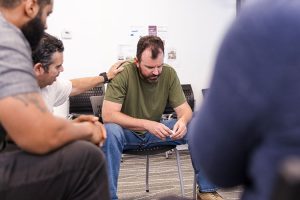
Groups, individual therapy, case management, and your weekly medical visit all happen over an online video call. Works from Fresno, Los Angeles, San Diego, to Bakersfield, or a house three miles from our building. Plenty of men choose this even when they live close.
Both of these are approved by the Joint Commission for virtual delivery, and both follow ASAM criteria, which is the same framework your insurance company is required to use in California. Most men start at one level and step down as things settle.
6-9 hours a week. This is the one that lets men keep working full time, and it’s what most people mean when they search for a virtual intensive outpatient program.
Weekly group and individual after you finish. Where most men land, and where the work actually holds.
Weekly, with a medical provider, over video. Details below.
A lot of programs put you in front of a prescriber once at intake and then once a month if you push. Here it’s weekly, over video, for as long as you’re in IOP.
That matters most in the first month, when doses may need adjusting, sleep is disrupted, and the difference between staying in treatment and giving up can come down to having support when it’s needed most.
This is what most men are looking for when they search for an online Suboxone doctor. The federal rules moved in a helpful direction: DEA and HHS extended telemedicine prescribing flexibilities through December 31, 2026, and a separate permanent rule lets a provider prescribe buprenorphine for up to six months to a brand-new patient with no in-person exam first.
Works for alcohol and opioids both, and it isn’t a controlled substance, so telehealth prescribing was never the obstacle. Oral goes to your pharmacy. Vivitrol is a monthly injection, so we coordinate with a clinic or pharmacy near you.
Both FDA-approved for alcohol use disorder and both badly underused. Acamprosate helps with the post-acute stretch, the sleep and the restlessness that make month two harder than week one. Disulfiram makes drinking physically miserable and works best when somebody at home is watching you take it.
Alcohol is behind most of the calls we get, and it’s the one men put off longest, because it’s legal, it’s everywhere, and there’s always somebody drinking more than you.
Do I have to quit completely? Not necessarily on day one. Some men come in aiming to cut down and choose abstinence a few months later once their head clears. Some go the other way. We’ll tell you straight if we think moderation is unrealistic given your history, and physical dependence usually means it is.
Is it safe to stop on my own? Sometimes no, and this is the one thing not to guess about. If you drink daily, shake in the morning, or have ever had a withdrawal seizure, don’t stop cold at home. Call us or an ER first, and we’ll sort out whether you need supervised detox.
Telehealth addiction treatment is regulated by the state you’re physically in during the appointment, not where the clinic sits. We’re licensed in California, so we can treat you in California.
It means a man in Bakersfield, El Centro, or Redding gets the same program as someone in Vista, which matters most in parts of this state where the nearest addiction treatment is 90 minutes each way and has a 3-week waitlist.
This is the real reason most men put it off. You’re usually more protected than you think, and California protects you more than most states.
California Labor Code 1025 requires employers with 25 or more employees to reasonably accommodate an employee who wants to voluntarily enter and participate in an alcohol or drug rehabilitation program, as long as it doesn’t impose undue hardship. The employer must also keep it confidential. That’s a state protection most people have never heard of.
It doesn’t require paid time off, and it doesn’t cover current impairment on the job. If you hold a professional license, work a safety-sensitive role, or you’re under a last-chance agreement, get an employment attorney before you disclose anything.
That’s what the evening IOP block is for. If you do need time, California State Disability Insurance can cover part of your wages while you’re in treatment for a qualifying condition, and FMLA and CFRA cover job-protected leave up to twelve weeks if you’re eligible. Your employer receives a certification of a serious health condition. Not a diagnosis.
Substance use treatment records fall under 42 CFR Part 2, which is tighter than HIPAA. Your employer, your family, and your insurer’s care management team don’t get your session notes. Nothing goes out without your written authorization, and you can revoke it.
Everybody’s schedule is different. This is a fairly typical week-three day for someone in virtual IOP who’s working full-time.
Your phone buzzes with a check-in. How'd you sleep? Cravings zero to ten, anything today you're worried about?
Lunch break. Twenty-five minutes with your counselor, taken from your car in the lot behind the building. Nobody inside knows.
Dinner. Actual dinner, at your own table, with the people who live there.
Group. Nine people, one clinician, ninety minutes. Around week two, it starts feeling like the part of the day you don't want to miss.
Group ends, and you're already home, because you never left.
Ten to fifteen minutes with an actual person. What’s going on, what you’ve tried, what you’re worried about. Nobody’s putting you on a payment plan on this call.
Usually same day. You get a written estimate of your cost before you commit to anything.
Sixty to ninety minutes with a licensed clinician, built on ASAM criteria. Together you decide PHP or IOP, virtual or hybrid.
Most men are in a group within 48–72 hours. If medication is part of the plan, a prescription can go out the same day as your first medical visit.
Roughly a third of the people who reach us aren’t the man with the problem. They’re a wife, a mother, a brother, or a grown child who knows something needs to change but isn’t sure what to do next.
You don’t have to have all the answers before you call. Tell us what’s going on, and we’ll help you understand what options are available. Sometimes that first conversation is exactly where things start to move in the right direction.
We’re here to help you figure out the next step.