
Quick Summary
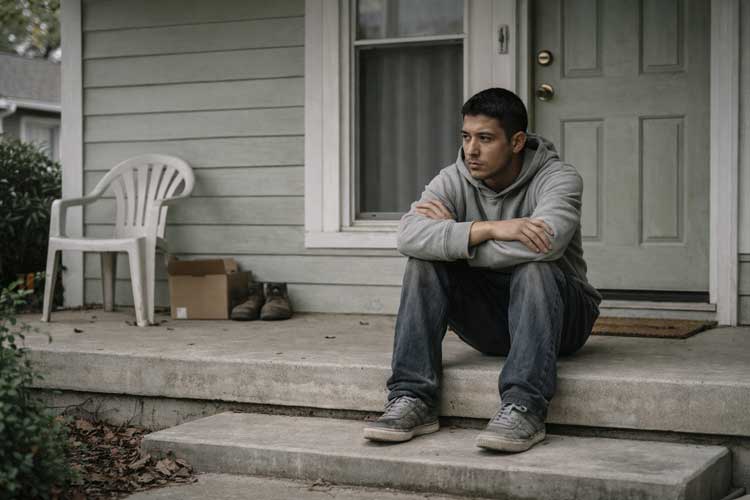
Men often start pulling away during hard times before they ever say they are struggling. Instead of talking more, they usually talk less, stay busier, get shorter with people, or spend more time alone while insisting everything is fine. From the outside, this can look like stress, irritability, or needing space. Underneath, it is often a mix of pressure, emotional overload, shame, and not knowing how to explain what is happening without feeling exposed. Pulling away can feel like control in the moment, but over time it usually makes the problem heavier, not smaller.
- Men often withdraw gradually through shorter conversations, less presence, and more emotional distance.
- Pulling away can look like stress management while quietly becoming isolation and avoidance.
- Work, routine, and productivity often hide how disconnected a man has become underneath.
- Honest connection usually gets harder after withdrawal becomes a pattern instead of a phase.
Pulling away usually starts before a man realizes he is doing it
Most men do not make a conscious decision to become distant. It tends to happen more gradually than that.
A hard season hits. Work gets heavier. Money gets tighter. Sleep gets worse. Stress piles up. Something feels off, but there is no clean place to put it. Instead of sorting it out directly, a man often narrows his world. He answers less. Talks less. Explains less. He stays busy and handles what has to be handled, but gives less of himself in the process.
That is part of what makes this pattern easy to miss. Withdrawal does not always look dramatic. Sometimes it just looks like a man becoming harder to reach while still getting through the day.
Distance can feel safer than honesty
When a man is under pressure, distance can feel efficient. It creates less emotional demand. Less explaining. Less vulnerability. Less chance of saying something that makes him feel weak, needy, or out of control.
That is why pulling away can feel protective in the moment. If you keep things short and surface-level, nobody gets too close to what is really happening. You can stay focused on tasks, responsibilities, and the next thing in front of you.
The problem is that distance solves very little. It protects the image of stability while the actual strain keeps building. That is part of the gap between appearance and authentic masculinity. Looking composed is not the same as being grounded. A man can stay functional while becoming more emotionally absent, more resentful, and more disconnected from himself.
Men often withdraw in ways that look reasonable at first
This pattern rarely begins with obvious isolation. It usually starts in socially acceptable ways.
A man works later. Says he is tired. Needs a little space. Spends more time in the garage, on his phone, in the yard, at the gym, or in front of a screen. He stops volunteering much about how he is doing. He answers questions with short practical responses. He becomes present in body but not really available.
That is what makes it tricky. None of those things look extreme on their own. They can all be explained away as stress, personality, or needing downtime. But when they keep stacking up, they often point to something deeper. The man is not just busy. He is pulling back from connection because connection now feels harder to manage.
Hard times often make men narrower, not louder
Some men become more outwardly emotional when life gets hard. A lot of men do the opposite. They get narrower.
Their language gets shorter. Their patience gets thinner. Their range gets smaller. They become less curious, less emotionally flexible, and more locked into getting through the day. That narrowing can look like control, but it is often overload.
When a man does not feel like he has room to process what is happening, he starts conserving himself. He cuts out anything that feels emotionally demanding. He may still show up to work, pay bills, complete tasks, and handle obligations, but he does it from a more closed-off place.
That is one reason withdrawal can be a warning sign even when a man still looks productive. Functioning does not always mean he is okay. Sometimes it means he is surviving by reducing contact with everything that requires emotional presence.
Pulling away is often a response to pressure, not a lack of caring
This matters because people around men often misread withdrawal. They assume distance means indifference. Sometimes it does not.
A man can care deeply and still pull away when he feels overwhelmed, ashamed, emotionally flooded, or unsure how to speak honestly. He may not know how to talk about fear without sounding weak. He may not know how to admit discouragement without feeling like he is failing. He may not trust himself to talk without getting defensive, flat, or irritated.
That does not make the distance harmless. It just means the distance is often less about not caring and more about not knowing how to stay connected under pressure.
The work-and-responsibility shield is common
One of the easiest ways for men to disappear is through responsibility. It sounds respectable. It often is respectable. But it can still become a shield.
A man buries himself in work, chores, errands, maintenance, routines, and practical demands. On paper, he looks disciplined. In reality, he may be using constant activity to avoid being still long enough to feel what is going on.
This is part of why some men look the most put together right when they are becoming the most disconnected. They are still handling life. They are just doing it from a more emotionally shut-down place. That kind of maintenance mode can make hard times last longer because busyness keeps covering the deeper issue.
Pulling away and isolation are not exactly the same, but one becomes the other fast
At first, pulling away can look temporary. A man takes space, goes quiet, keeps more to himself, and assumes he will come back once things settle down. Sometimes that happens.
But if the pattern keeps going, withdrawal turns into isolation. What began as a short-term coping move becomes the new normal. He starts expecting less connection, offering less honesty, and needing less from others on the surface. Underneath, that usually means he is carrying more alone.
That is where the cost gets heavier. Isolation magnifies whatever is already difficult. It gives stress more room to distort thinking. It gives shame more room to grow. It gives substances, distractions, or avoidance more room to become the main relief strategy. Brotherhood matters partly because real male connection can interrupt that slide before distance hardens into a way of life.
Men often pull away most when they most need steady contact
This is one of the harder truths in all of this. When men are struggling, they often start doing less of the very thing that would help them stay steadier.
Not because they are irrational. Because contact starts feeling expensive. Honest conversation takes energy. Being known feels risky. Letting someone see the real state of things can trigger embarrassment, defensiveness, or fear of judgment.
So a man protects himself by withdrawing. The problem is that the same move that reduces pressure short term usually increases pressure long term. He gets less perspective, less connection, less accountability, and less interruption to the thoughts already running his life.
Withdrawal often shows up in tone before it shows up in words
A lot of men do not say, “I am shutting down.” You hear it in the tone first.
They become flatter. More irritated. More clipped. Less open. Less playful. Less willing to stay in any emotionally direct conversation. They might say they are just tired or just stressed. That may be true. But tone often reveals that something deeper is tightening.
This matters because men do not always track their own emotional state clearly while it is happening. They may notice the exhaustion, but not the emotional withdrawal underneath it. They may notice the stress, but not how much less available they have become.
That is one reason more active, grounded environments sometimes help men stay engaged. Approaches like adventure therapy or experiential therapy can sometimes reach men who shut down in passive or overly verbal settings. The point is not that every man needs action to be honest. The point is that format matters.
Withdrawal gets riskier when substances start helping with the silence
When men start pulling away, substances can become more attractive for a simple reason. The emotional range is already getting narrower, and relief starts feeling more valuable than clarity.
A drink at night feels like a break. Drugs feel like a shortcut to switching off, loosening up, or getting through another flat day. The more disconnected a man becomes, the easier it is to use something without fully admitting what job it has started doing.
This is where hard times become more dangerous. A man is already alone in his head more than he should be. If substances begin taking the edge off that isolation, he has even less reason to reengage honestly. What looks like stress management can become a deeper pattern of avoidance.
Structure helps men who are starting to disappear into themselves
A lot of men do not need abstract advice when this starts happening. They need structure.
They need their week to hold more than work, relief, and collapse. They need something that interrupts the narrowing effect of stress and distance. Sometimes that means more consistent support than casual check-ins can provide. Sometimes it means a level of care that fits real life while still adding accountability and contact.
That is part of where a practical intensive outpatient program or outpatient treatment program can matter. Not because structure fixes everything on its own, but because men often do better when connection, routine, and follow-through are built into the week instead of left to mood.
At Sacred Journey Recovery, that kind of structure shows up through assessment, coordinated care, and matching support to what is actually happening, not just what a man says he can handle.
Pulling away can become part of a man’s identity if he is not careful
This is another reason it is worth naming. Men can get so used to withdrawing under pressure that they start treating it as personality.
They say they are private. Independent. Better on their own. Not great at talking. Low maintenance. Sometimes those things are partly true. But sometimes they are just the language a man uses for a long-standing pattern of disconnection.
Once withdrawal becomes identity, it gets harder to challenge. A man stops asking whether his distance is helping him. He starts assuming it is just who he is. That can keep him stuck for years.
The goal is not to make men talk constantly
This is important. The answer to pulling away is not endless emotional processing or forcing men into a style of communication that feels unnatural.
The goal is steadier honesty. More accurate contact. Less hiding behind productivity, silence, or irritation. A man does not need to say everything. He does need to stop disappearing every time life gets hard.
That might mean shorter, more direct conversations. It might mean staying engaged through action, routine, or shared work instead of long verbal analysis. It might mean learning how to say one true sentence earlier instead of waiting until things have gone off the rails.
When withdrawal starts shaping recovery
Withdrawal matters in recovery because the more disconnected a man becomes, the easier it is for old habits to step back in. Less contact means less interruption. Less interruption means more room for rationalization. And when hard times already have him narrowing down emotionally, relief starts looking more reasonable than honesty.
That does not mean every quiet man is in danger. It does mean withdrawal deserves attention when it becomes a pattern. A man can stay outwardly responsible while inwardly sliding. He can still handle work, errands, and obligations while becoming less reachable, less honest, and less connected to anything that keeps him grounded.
That is the real issue. Pulling away during hard times can feel like self-protection, but it often becomes a slower way of getting lost.