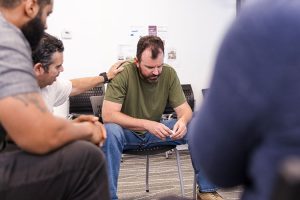
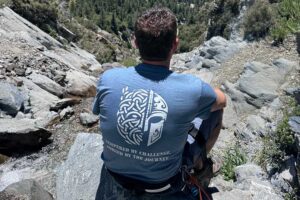
Intensive outpatient addiction treatment at Sacred Journey Recovery gives men a way to get real help without disappearing from work or family. Our intensive outpatient program (IOP) in Vista, CA combines structured clinical care, adventure-based challenges, and a men-only peer group so you can stop trying to manage this alone and start making real progress.


You’ve been trying to hold everything together, work, relationships, responsibilities, while use, cravings, and stress keep pulling you off track. Maybe you’ve had stretches of white-knuckled sobriety followed by the same old crash. You know you need more support, but disappearing into long-term residential care doesn’t feel possible or even necessary.
Sacred Journey Recovery’s Intensive Outpatient Program (IOP) in Vista, CA is built for men in that exact spot. It’s serious, structured care several days a week, combined with adventure-based work and a brotherhood that expects effort and honesty. You still sleep at home and show up for your life, but you’re no longer trying to do this alone.
If you need more than a weekly therapy session but can’t step away from your job, school, or family, IOP may be the right choice.
An Intensive Outpatient Program is a level of care that sits between standard once-a-week counseling and full-time residential treatment. You attend multiple sessions each week on a set schedule, combining clinical therapy, skills work, and group support, then return home at night.
IOP gives you enough contact and accountability to actually change habits, thought patterns, and routines, while still allowing you to work, study, or care for your family. Instead of “checking in” once a week and hoping things improve, you’re in consistent contact with a team that knows you, watches patterns, and adjusts your plan in real time.
For many men, IOP is the sweet spot: intense enough to move the needle, flexible enough to keep your life moving.
IOP at Sacred Journey Recovery is designed for men who are ready to stop trying to muscle through on their own. It’s a good fit if:
You don’t have to be “at the bottom” to belong here. IOP is for men who are done with half-measures and want real change.
One program, multiple tracks tailored to what you’re actually dealing with. In IOP, we work with:
IOP here is not “sit in a room and talk for a few hours” and then go home unchanged. Sacred Journey blends clinical therapies excellence with challenge, movement, and real-world practice.
A lot of men wait to get help because they think treatment means stepping completely out of life. IOP is built to work differently.
You attend programming several days per week on a structured schedule, then go home. Many sessions can be arranged around daytime obligations, so you can keep working, attending classes, or showing up for family while you’re in treatment.
Between sessions, you test skills in real time: hard conversations at home, decisions at work, moments when you’d normally reach for a drink or drug. At your next IOP block, you bring those experiences back into the room, what worked, what didn’t, and refine your plan with staff and peers. The goal is not to protect you from life, but to help you handle life differently.
Understanding where IOP fits can make the decision easier:
IOP vs Residential / Inpatient
Residential care means living on-site with 24/7 support and a completely controlled environment. IOP is less intensive: you live at home, manage your responsibilities, and attend treatment multiple times per week. It’s often used as a step down after higher-level care, or as a primary level for men who don’t need full residential.
IOP vs PHP (Partial Hospitalization Program)
PHP usually involves more hours per week and a “full-day” treatment schedule. IOP is a step down in intensity but still carries real structure and accountability. Sacred Journey offers both PHP and IOP so men can move up or down as needed.
IOP vs Weekly Therapy
Weekly individual therapy can be helpful, but for most active substance use patterns it isn’t enough on its own. IOP gives you multiple touchpoints each week, group support, and a clear framework to change habits—not just talk about them.
Think of IOP as the middle lane: serious work, real challenge, and built-in support, without losing your connection to everyday life.
You reach out by phone or contact form. We listen, ask a few focused questions, and explain whether IOP seems like a good fit and what next steps could look like.
Next, we walk through your history, current use, mental health, and goals. Together, we will decide on the right level of care and a realistic starting plan for you.
Our team checks your benefits, explains coverage, and walks through schedule options so you know exactly how IOP fits into your week.
On your first day, you meet key staff, see the space, and learn what to expect in group. The first week is about finding your rhythm and setting clear goals.
As you move through IOP, we check in regularly on what’s working and what isn’t. Your plan is adjusted so progress stays honest, doable, and sustainable.
There are plenty of programs that talk about change. Sacred Journey Recovery is built to demand it in a way that is challenging, supportive, and grounded in brotherhood.
Men-Only Environment
No need to posture or play a role. You’re surrounded by other men who are tired of pretending they’re fine and are ready to do the work.
Adventure-Based, Not Couch-Bound
Outdoor challenges, wilderness experiences, and physical tests are core to the program. You don’t just talk about resilience—you build it.
Trauma-Informed, Holistic Approach
Clinical work, body-based practices, and spiritual reflection are integrated so you’re not just managing symptoms, you’re healing at the root.
Vista, CA Location
Close to San Diego, beaches, and mountains, Vista gives you access to both nature and community ,a powerful backdrop for the kind of work we do.
Committed Staff and Alumni Support
You work with therapists, medical providers, spiritual guides, and mentors who are invested in your growth, plus an alumni network that keeps connection going after formal treatment ends.