
Quick Summary
You still show up. Bills paid, job intact, but the weed you smoke or vape every night to come down has quietly become the anchor of your evenings, and somewhere in the last few years your drive and interest in things went gray. That’s the version of dependence men rarely flag, because it never blew up the way alcohol or stimulants might have. The cost shows up as a narrowed life and flattened motivation. Naming that is about noticing what daily use took off the table.
Daily cannabis use can become dependence without any dramatic consequence forcing the issue.
“Still functioning” often hides the erosion of drive and genuine interest.
Withdrawal symptoms like irritability and poor sleep can keep the habit locked in.
Treatment starts with an honest assessment.
What Marijuana Dependence Actually Looks Like in Functional Men
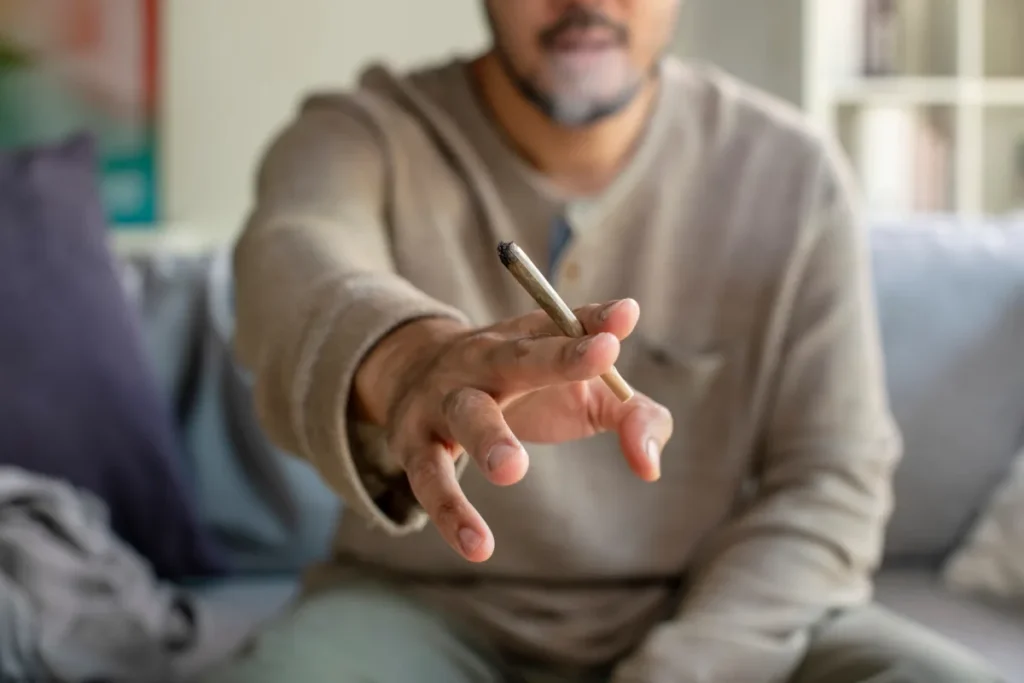
You never hit what you imagine “rock bottom” looks like. You clock in to work, and then when the day ends and you roll one or reach for the vape because that’s how your evening always starts now. It has been this way long enough that you stopped counting the years.
That’s exactly the kind of dependence that men let slide. The things you associate with “addiction” might look nothing like how you look on the couch at night, so you chalked it up to habit and moved on. But a habit is something you do out of routine. Dependence, on the other hand, is when the days you skip feel off in a way you can’t quite name or when the plan to take a break keeps sliding to next week.
The National Institute on Drug Abuse notes that regular cannabis use can progress to cannabis use disorder, and that higher-THC products are associated with a greater likelihood of this progression. Plenty of what men bring to the conditions we treat starts here, with a substance that never made a scene. The men who look most put-together are frequently the ones taking the damage the quietest. You can hit every deadline and still be looking fine while quietly losing your sense of purpose.
Why Daily Weed Quietly Flattens Motivation and Drive
Regular cannabis use can blunt your brain’s reward system over time. The stuff that used to register as satisfying can start landing flat, and the easiest reliable way to trigger that reward system again is the one waiting for you every night. That flattening of motivation and interest is something clinicians observe often in men who use daily, developing over time before you even realize it.
The evening ritual makes it more difficult. If you smoke to fall asleep, your sleep starts starts to depend on it. Similarly, if you use to take the edge off a stressful day, your baseline stress can start leaning on it too. Then when you skip a day and your sleep or mood worsen, you feel like you have no choice but to return to the weed. Not to mention your tolerance growing over time, making it so the amount that used to work for you doesn’t anymore, so you start to use more.
At some point the evening high stops being the reward and becomes the thing the whole day is quietly organized around. Now you’re managing the absence of a feeling you used to have. If that dull, walled-off quality sounds familiar, it’s worth reading about emotional numbness and what actually helps, because the flatness often doesn’t lift on its own just because you quit.
Signs Your Marijuana Use Has Become a Dependence Worth Addressing
You’ve Tried to Cut Back and It Didn’t Hold
Maybe you tried a Dry January or a “just weekends” rule, or perhaps you told yourself you’d stop when the stress at work let up. It held for a while and then it didn’t. Failed cutback attempts are one of the clearest tells.
Going a Night or Two Without Marijuana Feels Off
When you do skip a night without marijuana, you might get irritable over nothing, or your appetite drops and food stops sounding good. You feel restless. A review of cannabis withdrawal syndrome based on the DSM-5 notes that common features include irritability, sleep problems, decreased appetite, and restlessness, and the discomfort and craving that accompany withdrawal can make it difficult for some people to remain abstinent.
You Use to Feel Level Instead of Good
The high is now the baseline you need to hit just to feel like the day is over. And around all of it, your life has narrowed. Fewer plans. Less initiative. The circle of what you do on a given night has shrunk to the couch and the same routine.
In our clinical experience, men rarely walk in and say the problem is cannabis. They come in citing low motivation or a general flatness they can’t shake. The daily use only surfaces a few questions later, usually when we ask what they do in the evenings. Dependence measured by whether you’re still functioning is often a poor gauge, because function is the last thing to go.
What Marijuana Dependence Treatment for Men Involves
Marijuana dependence treatment for men starts with an assessment of what’s actually going on. Someone walks through your use, history, sleep, stress, and what the weed has been doing for you to figure out what you’re actually dealing with. Some men need structured outpatient support while others, especially those managing anxiety, old trauma, or heavy use, often do better with a higher level of care where the days have real structure to them. If you’ve tried talking to someone once a week and found it didn’t hold, it may be worth understanding when weekly therapy isn’t enough support and what steps up from there.
Because cannabis dependence is largely behavioral, the work leans on approaches with a track record for it. A peer-reviewed study of cannabis use disorder and its treatment points to structured therapies that target the patterns and the payoffs, the specific situations that trigger use and the coping the substance was standing in for. If weed was managing something else, taking it away without addressing what it managed can just leave the hole open to be filled again.
At Sacred Journey Recovery, our men-only program in Vista coordinates care so those pieces connect, and step-down planning means the support doesn’t vanish the moment you feel steadier. The accountability lands differently coming from guys who aren’t buying the “I’m fine” you’ve been selling everyone else. If quitting feels like it would cost you something you rely on, that fear shows up in other places too, and it’s worth reading how quitting can feel like losing your edge.
Talking to Sacred Journey Recovery About an Assessment
You don’t have to decide anything right now. One honest conversation can help you see how your relationship with cannabis has changed over time. When you’re ready, talk to our admissions team about a straightforward assessment to get a clear picture of where you actually stand, from people who deal with this every day and aren’t going to be surprised by anything you tell them.
Sources
National Institute on Drug Abuse. “Cannabis (Marijuana).”
Livne O, et. al. “DSM-5 cannabis withdrawal syndrome: Demographic and clinical correlates in U.S. adults.”
Schluter MG, et. al. “Promoting self-change in cannabis use disorder: Findings from a randomized trial.”